Evolve Your Life Logo

Facial Feminization Surgery (FFS)


Reveal your true reflection.
At Evolve Your Life, we believe everyone deserves to feel seen — not just by the world, but by the person in the mirror. For transgender women, nonbinary individuals, and anyone seeking softer, more traditionally feminine features, Facial Feminization Surgery (FFS) is a powerful, life-affirming step toward alignment between self and appearance.

Led by internationally recognized facial gender surgeon Dr. Amir Dorafshar, our practice offers a comprehensive, three-phase approach to FFS that tailors each plan to your unique anatomy, goals, and identity — for natural, harmonious, and lasting results.

Facial Feminization Surgery (FFS)

Reveal your true reflection.
At Evolve Your Life, we believe everyone deserves to feel seen — not just by the world, but by the person in the mirror. For transgender women, nonbinary individuals, and anyone seeking softer, more traditionally feminine features, Facial Feminization Surgery (FFS) is a powerful, life-affirming step toward alignment between self and appearance.

Led by internationally recognized facial gender surgeon Dr. Amir Dorafshar, our practice offers a comprehensive, three-phase approach to FFS that tailors each plan to your unique anatomy, goals, and identity — for natural, harmonious, and lasting results.

What is Facial Feminization Surgery?

Facial feminization surgery is a set of surgical procedures designed to soften traditionally masculine features and create a more feminine facial appearance. These procedures modify the underlying bone structure, facial soft tissue, and neck anatomy to bring your outer appearance into alignment with your gender identity and sense of self.

FFS may involve subtle refinements or more dramatic transformations depending on each patient’s needs. By addressing the upper, middle, and lower thirds of the face, as well as the neck, we help patients achieve results that feel natural, affirming, and uniquely their own.

Who seeks out FFS — and why?

Many of our patients are transgender women or nonbinary individuals who experience gender dysphoria related to facial characteristics. Others may be cisgender women who feel their facial features are more angular or prominent than they’d prefer. Regardless of background, the common thread is the desire to feel comfortable that your face belongs to you.

Good candidates for FFS typically:

  • Are in good physical and mental health
  • Do not smoke or are willing to stop before and after surgery
  • Have realistic expectations for results and recovery
  • Seek facial harmony that aligns with their identity, not a “cookie-cutter” ideal

The Four Key Areas of Facial Feminization

1

Upper Third of the Face

Forehead • Hairline • Brow Bone

The upper third has a powerful influence on gender perception. This region includes the hairline, forehead contour, and eyebrows — all of which are typically more prominent and angular in masculine anatomy. Feminization involves reshaping and repositioning these features to soften the overall appearance.

Dr. Dorafshar may recommend:

  • Forehead contouring and brow bone reduction. This involves contouring or reconstructing the frontal sinus (the area above the eyes) to eliminate prominent ridges and achieve a smoother, more curved forehead.
  • Hairline advancement (scalp advancement). This procedure lowers the hairline, shortening the forehead and correcting “M-shaped” recession patterns that are common in cis-male hairlines.
  • Brow lift. These techniques elevate and reshape the brows, creating a more natural feminine arch and opening the upper eye area.
  • Supraorbital rim contouring. Contouring softens the upper edge of the eye socket, helping to reduce a deep-set appearance and brighten the eyes.

We use CT-based 3D surgical planning and custom guides to create a precise surgical plan that matches your anatomy.

Incision techniques include:

  • Coronal incision – Placed behind the hairline, ideal for patients with good hairline shape.
  • Pretrichial incision – Made along the hairline to allow lowering and reshaping; well-camouflaged over time.
2

Middle Third of the Face

Cheeks • Nose • Upper Lip

The middle third of the face includes the cheeks, nose, and upper lip — all of which play a key role in defining feminine softness, curvature, and proportion.

In masculine facial anatomy, this area often features flatter cheekbones, a longer upper lip, and a broader nose. Feminization techniques restore volume and refine these structures to enhance harmony with the rest of the face.

Dr. Dorafshar may recommend:

  • Cheek augmentation. This is achieved using fat grafting or custom implants to restore or enhance volume and forward projection, creating rounder, more youthful cheek contours.
  • Feminizing rhinoplasty. This procedure refines the nose by smoothing the bridge, narrowing the nostrils, and reshaping the tip to be softer, slightly upturned, and in balance with other features. We always take care to preserve function and ethnic identity.
  • Lip lift or upper lip reshaping shortens the distance between the nose and upper lip, increases dental show, and creates a fuller, more delicate mouth shape and a youthful, feminine smile.
3

Lower Third of the Face

Jawline • Chin

The lower third of the face strongly influences facial width, angularity, and perceived gender. A square jaw and broad chin are hallmarks of masculine anatomy. Feminization in this area involves reducing bone volume and reshaping the jawline into a more tapered, “V-line” form.

Dr. Dorafshar may recommend:

  • Mandibular angle reduction. This procedure removes or reshapes the lower jaw angles to slim a square or wide jaw. This is done through incisions inside the mouth, leaving no visible scars.
  • V-line contouring. This shaping procedure may involve removing bone along the lower border of the jaw to create a smoother, more delicate shape.
  • Genioplasty (chin surgery). This can allow for precise adjustments in chin height, width, and projection. This helps bring the lower face into better proportion with the cheeks, nose, and forehead.

All lower face incisions are placed inside the mouth to avoid visible scars. We use 3D modeling and computer-assisted planning for accuracy and safety, minimizing nerve injury risk and helping ensure symmetric results.

4

Neck

Adam’s Apple • Thyroid Cartilage

The Adam’s apple is a prominent gender marker. Tracheal shave, also known as chondrolaryngoplasty, reduces the visibility of the thyroid cartilage for a smoother, more feminine neck contour.

  • Tracheal shave (chondrolaryngoplasty) reduces the projection of the thyroid cartilage. This can be done through a small incision in the neck crease (transcervical) or internally through the mouth (transoral), depending on your goals and anatomy.

The goal is a smoother neck contour that complements other facial changes — without affecting the vocal cords or voice.

Our Approach: The Three Phases of FFS

Guided by extensive experience in reconstructive and feminization surgeries, Dr. Dorafshar has developed a three-phased approach to facial feminization that promotes safe healing, natural-looking integration and optimal results. He customizes each phase based on your goals and anatomy. Not all patients will require all three phases, and each treatment plan is unique. But many patients will see the benefit of this careful staging. 

Phase 1:

Foundation – Bone Contouring & Structural Changes

This first phase lays the groundwork for facial transformation. It’s where we create the skeletal foundation of your new facial profile by reshaping the bone structures that define facial gender. This is often the most dramatic transformation in your FFS journey.

  • Forehead contouring and brow bone reduction smooth and soften prominent features in the upper third of the face, helping create a more traditionally feminine brow and forehead shape.
  • Scalp advancement lowers the hairline to reduce forehead height and improve facial proportions.
  • Jaw angle reduction reshapes the lower face, slimming wide or angular jawlines and enhancing facial symmetry.
  • Genioplasty (chin reshaping) adjusts the size and projection of the chin to achieve softer, more balanced lower facial contours.
  • Tracheal shave reduces the prominence of the Adam’s apple to refine the neck profile.

What to expect:

  • Most patients stay overnight for observation.
  • Swelling and bruising typically peak around 2 weeks and improve steadily.
  • You can usually return to light activities within 3–4 weeks, with continued healing over the next several months.
  • Results from this phase are permanent and create the structural foundation for everything that follows.
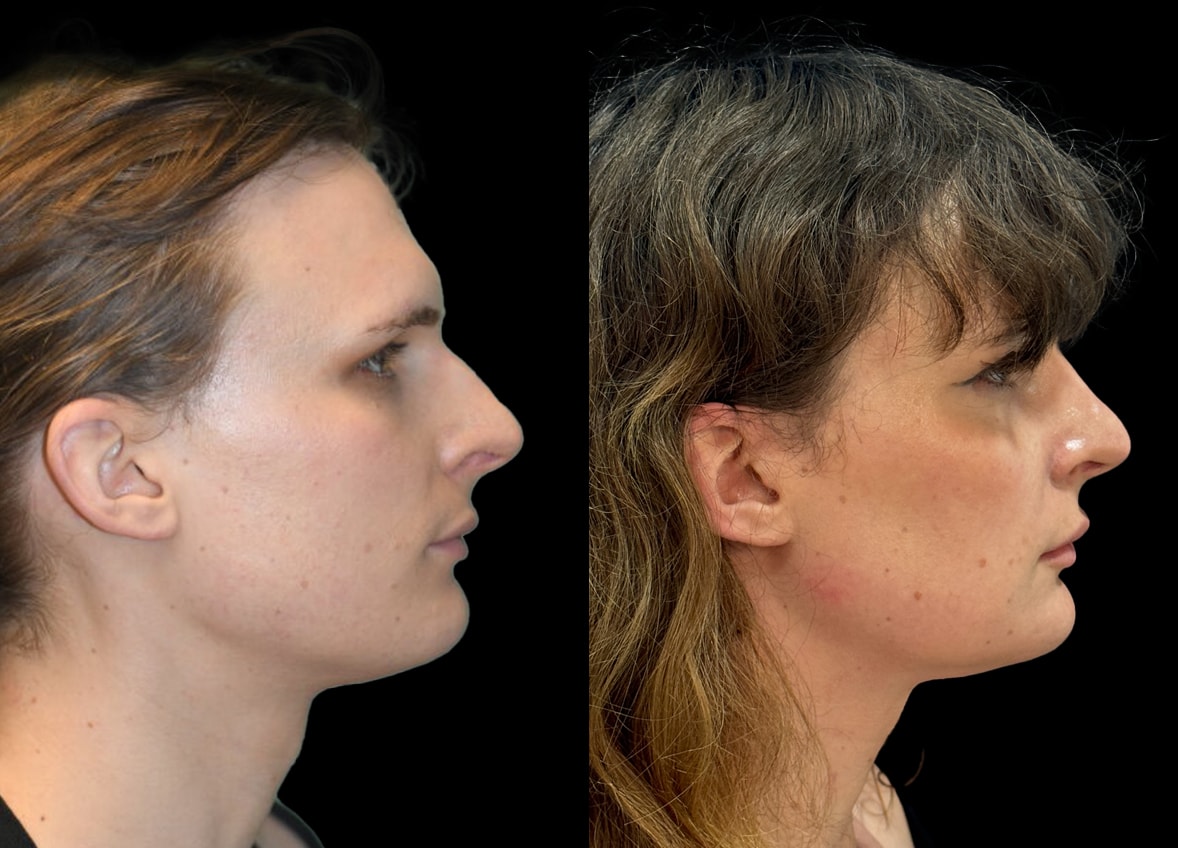
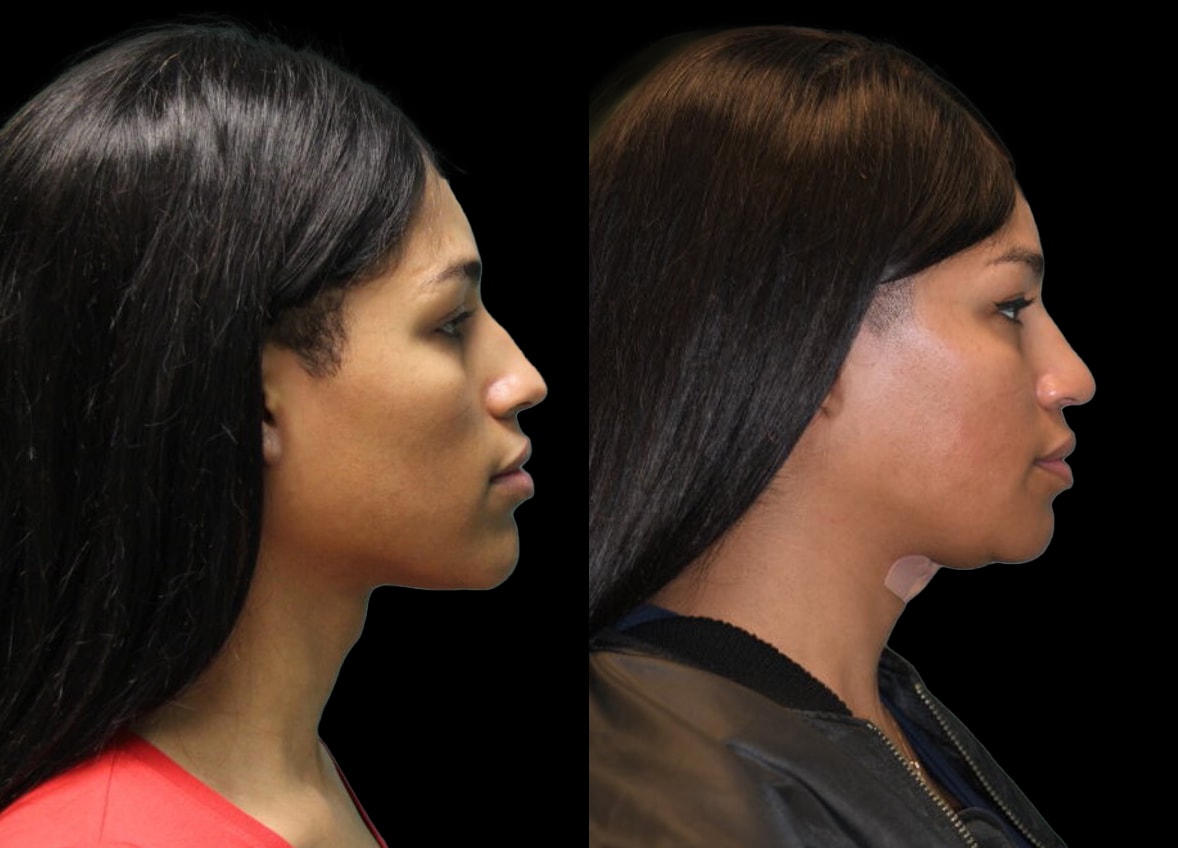
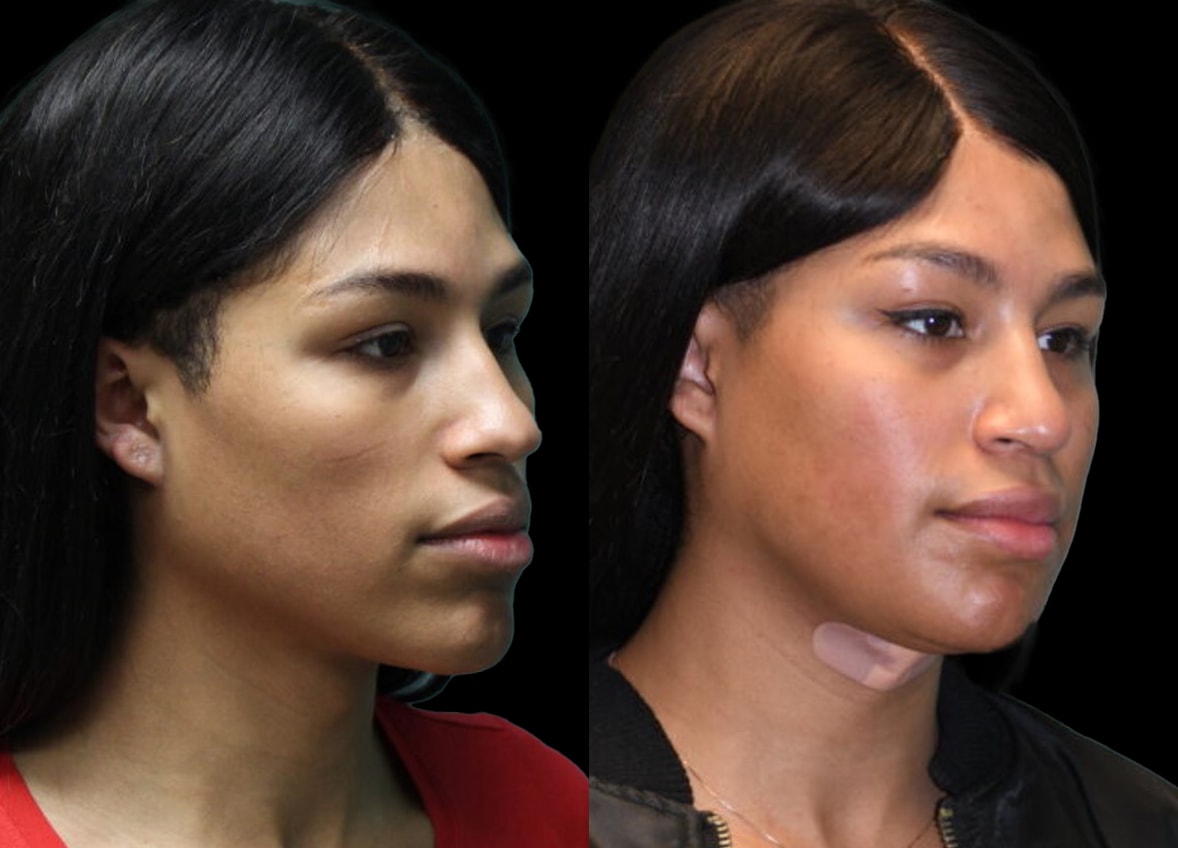
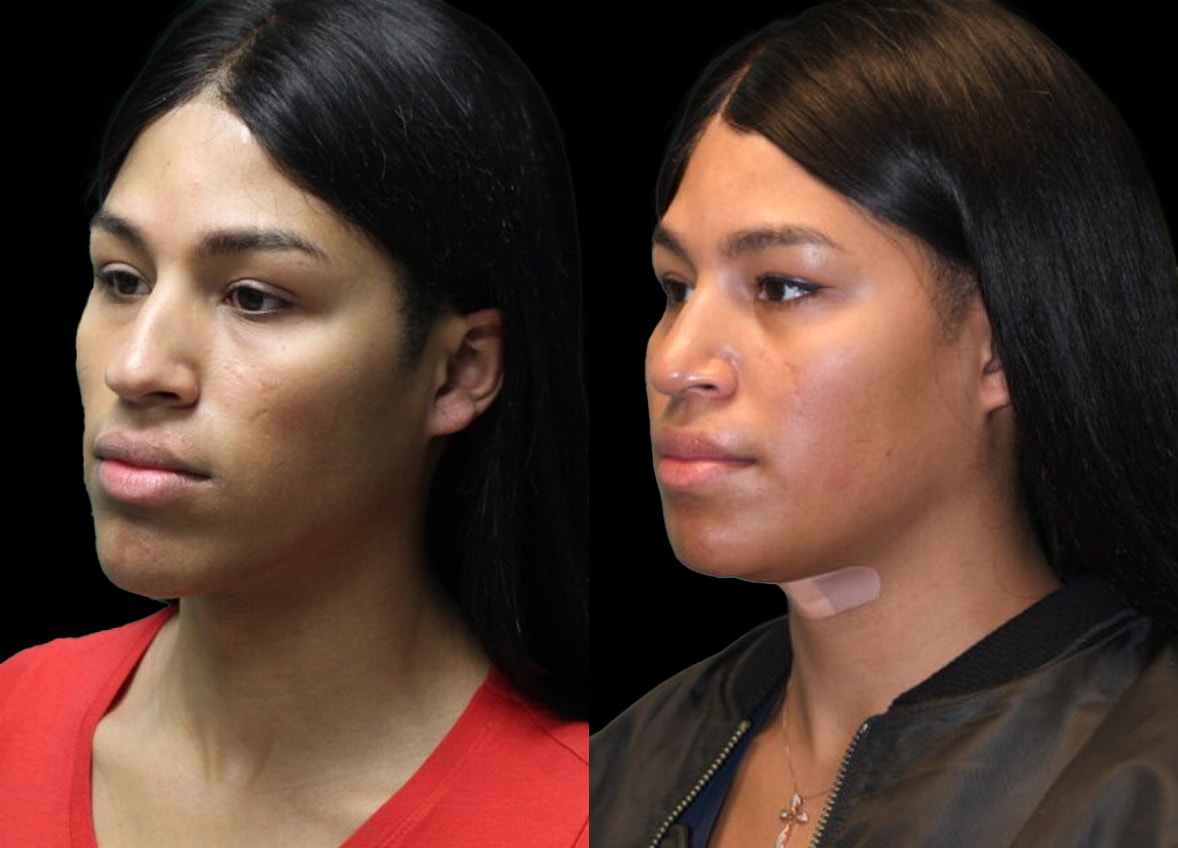
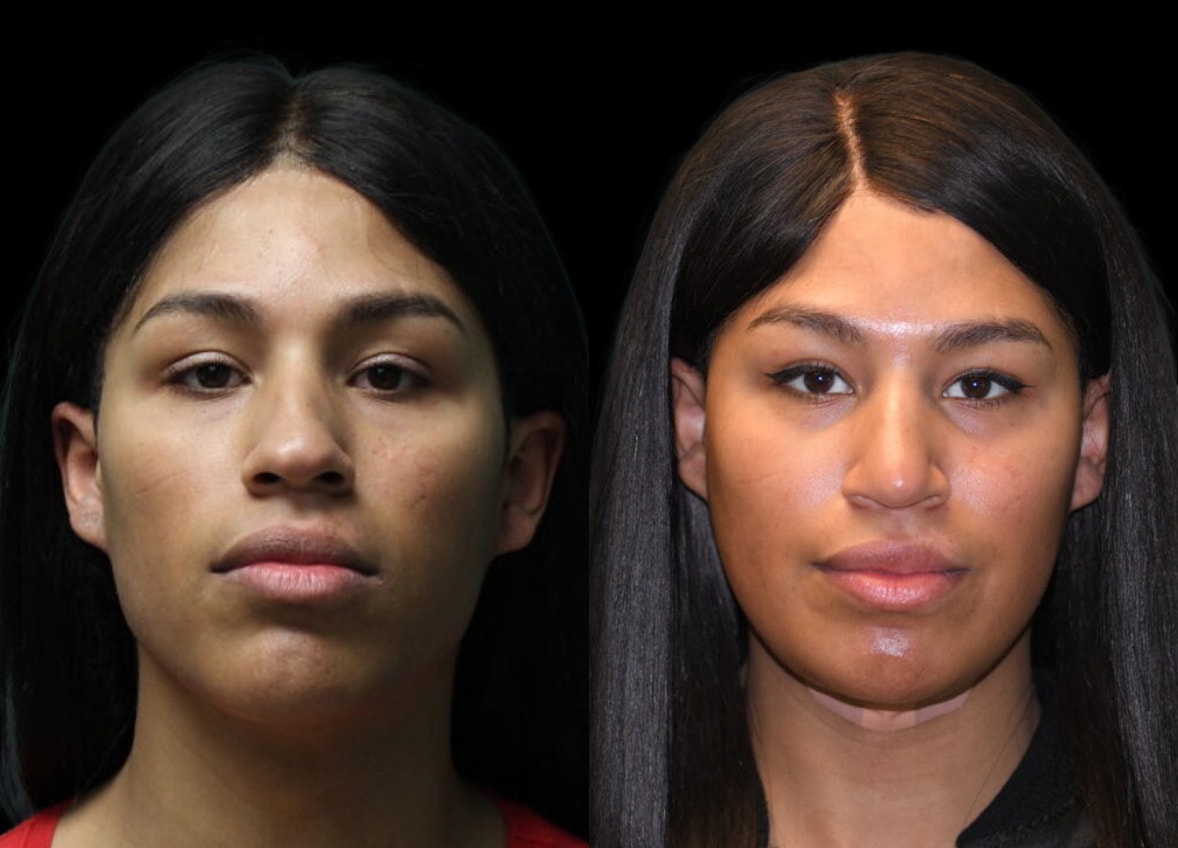
Evolve Your Life bone contouring and structural changes
Evolve Your Life before and after gender affirmation

Phase 2:

Nasal Refinement

Feminizing Rhinoplasty

The nose is a central feature — and even small changes can dramatically shift facial harmony. Once the underlying bone work from Phase 1 has healed, we refine the nose to align with your new proportions and overall facial aesthetic.

  • Feminizing rhinoplasty involves smoothing a prominent nasal bridge, refining the nasal tip, narrowing the nostrils, and adjusting projection or rotation as needed.
  • This procedure is fully customized to your facial anatomy, goals, and ethnic identity, so the result feels natural and authentic — never overdone.
  • Functional improvements (like correcting a deviated septum or improving airflow) are often performed at the same time.

What to expect:

  • Most patients experience visible swelling and bruising for 2–3 weeks.
  • Subtle swelling may persist for several months, with final results becoming clearer at 6–12 months.
  • Most return to work or social activities within 1–2 weeks.
  • This is often one of the most noticeable and rewarding phases of FFS.

Phase 3:

Final Refinements & Volume Restoration

The final phase focuses on the details — the subtle touches that bring your results together. Here, we enhance volume, refine contours, and create softness in areas where bone work alone isn’t enough. This phase is about balance, symmetry, and completing the picture.

  • Fat grafting or implants may be used to add fullness to the cheeks, lips, or temples — areas that naturally hold more volume in feminine faces.
  • Lip lift or reshaping shortens the upper lip and increases dental show, enhancing your smile and adding youthful lift.
  • Contour adjustments fine-tune facial harmony, smoothing transitions and enhancing symmetry where needed.

What to expect:

  • Recovery is typically shorter and less intense than earlier phases.
  • Swelling usually resolves within 1–2 weeks.
  • Many patients return to routines within 7–14 days.
  • This phase often marks the moment when everything comes together — and when your reflection truly begins to feel like you.
Detailed view of a patient's lips
Dr. Amir Dorafshar with a facial feminization surgery patient

Your Guide to Facial Feminization Surgery (FFS) with Evolve Your Life

Congratulations on taking this exciting step in evolving your life! We look forward to being part of your journey. 

This guide will help you prepare for surgery, and ensure your recovery goes as smoothly as possible. If you have any questions, please don’t hesitate to contact our office at (312) 278-9000.

Preparing for Your Initial Consult: To obtain the full benefit from your initial consultation, it can be beneficial to think about your options and goals in advance, and bring a list of questions. This will assist you and your team in developing the right plan to achieve your desired results.

Resources

Resources that may be helpful to you as you consider this procedure:

There are a number of Online Communities that offer information and support regarding FFS, including:

Transgender Surgeries Subreddit is a large international discussion group on Reddit that describes itself as “A sub for the discussion of surgeries, surgery results, surgeon satisfaction and the costs incurred by transgender people.” It includes discussion of facial feminization procedures, as well as other gender affirming surgeries.

FFS Facial And Body Feminization Surgery / TS TG Facebook Group is an international Facebook group  whose description includes, “This group is for transgender women or anyone in the trans feminine spectrum seeking information related to facial and body feminization surgeries.”

YOUR FFS GUIDE

Your Initial Consultation

At your consultation, you will meet with the surgeon to discuss:

Goals
Goals are always unique to the patient, and in addition to feeling more embodied may include things like addressing a facial feature that causes significant dysphoria, ensuring a feature ages well and does not require ongoing maintenance, or retaining a family resemblance.

Options and Costs
On understanding your goals, Dr. Dorafshar will discuss the options that would best help you to achieve your objectives.

Timing and Recovery Considerations
Once you’ve identified what you would like done, Dr. Dorafshar can assist in staging your FFS to accomplish your goals. He will tell you what procedures can safely be combined so that you can plan your specific journey, and your recovery. This will assist you in working with our office to identify the best time to schedule your surgery.

YOUR FFS GUIDE

Once You Book Your Surgery

There are a variety of things you can do in advance to prepare for a successful surgery:

  • Hospital Stay: Typically, for phase 1, bone remodeling surgery, Dr. Dorafshar prefers to keep you overnight in the hospital for observation after a longer surgery. You should be prepared for 1 overnight stay, and to be discharged the following day.
  • Outpatient Surgery: For some procedures, outpatient surgery may be more appropriate. In these cases, you will go home after recovering from surgery. These surgeries will be typically performed in a surgery center.
  • Driver: Make arrangements for a trusted friend or family member to drive you home after your procedure. You will not be able to drive yourself home due to the effects of anesthesia and post-surgical medications.
  • Hotel: If you are having outpatient surgery and wish to stay near the surgical center after your surgery, you may book a room at a nearby hotel. Please ask our office for information about special rates.
  • Support for First 24 Hours: Schedule a friend or relative to stay with you for 24 hours following surgery, or ask our office to arrange an overnight nurse to assist you.
  • Support for First Few Days: Request support from friends or family as needed for the first few days of your recovery, such as assistance with picking up food or medications.
  • Set Expectations: Consult resources recommended by your surgical team and support communities to develop an accurate understanding of what to expect during the surgery and recovery process for your specific procedures. This will greatly reduce stress, and streamline your recovery process.
  • Paperwork: If you will be applying for short term disability leave or work accommodations to support your recovery, please obtain these forms and forward to our office as soon as possible so that we can coordinate their completion in a timely fashion. If you plan to file for out-of-network health insurance reimbursement, please contact your insurance in plenty of time to request any information you need from us, such as procedure codes.

Choose Recovery Aids

Review the list of recommended recovery aids and decide which ones you will incorporate into your plan:

  • Pajamas or lounge wear with a top that buttons or zips down the front, so that you can put it on without disturbing your surgical sites.
  • Wedge pillow for the early stages of your recovery, to keep your head comfortably elevated when reclining or sleeping. This can help reduce swelling and keep you more comfortable.
  • Clear liquids for the first 1-2 days, such as clear broths, jello, tea, popsicles, Italian ice, apple or grape juice, and non-carbonated flavored water. This will be especially important if any of your procedures involve incisions inside your mouth,
  • Soft foods such as eggs, fish, applesauce or soup for the next few days.
  • Easy to prepare foods for the following few days.
  • Cooling masks or ice cold water towels to comfort the facial areas that will be refined during surgery. Having two will allow you to cool one mask or towel while you are using the other.
  • Stool softener to reduce the risk of constipation from anesthesia or post-surgical pain management medications, and Dulcolax suppositories in case you need additional assistance.
  • Rinse-free foaming cleansing cloths to freshen up until you are comfortable showering.
  • Text-to-voice app if you will be having work done that may temporarily make talking uncomfortable.
  • Scar treatment cream such as Biocorneum from Skin Medica
YOUR FFS GUIDE

Two Weeks Prior to Surgery

There are a number of things you can do to ensure your body and mind are great shape for surgery, and you are well prepared:


Important

  • Prescription Instructions: Consult with your surgical team on what to do regarding any prescription medications, and when to schedule your followup appointments.
  • Allergies: Make sure your surgical team is aware of any medication or latex allergies you may have.
  • Supplements: Discontinue any herbal or dietary supplements, as these can have unpredictable interactions with anesthesia, medications, or surgical and recovery risks.
  • Vitamin E, Aspirin and Ibuprofen: Stop taking large doses of vitamin E, and stop taking any products containing aspirin or ibuprofen, as these can increase the risk of bleeding. It is okay to take Tylenol (acetaminophen) as needed.
  • Tobacco: Stop any smoking or vaping of tobacco products, as these can significantly increase surgical risks for at least 6 weeks prior and after your surgery.
  • Cannabis: Stop using any cannabis products, or disclose your usage accurately to your medical team, as cannabis can affect your response to anesthesia.

Recommended

  • Support for First 24 Hours: Confirm that the requested friend or relative is still available to stay with you for 24 hours following surgery, or ask our office to arrange an overnight nurse to assist you.
  • Support for First Few Days: Confirm that the requested friend(s) or relative(s) are still available to support you as needed for the first few days of your recovery.
  • Multivitamin: Begin taking a high-quality daily multivitamin.
  • Healthy Diet: Consider adopting a reduced inflammation diet focused on protein and vegetables, and reducing the consumption of processed foods, alcohol, starch and sugar.
  • Recovery Aids: Purchase any recovery aids you have selected from the list on the previous page.
  • Hibiclens: Obtain a bottle of Hibiclens from your local pharmacy, and read the instructions.
YOUR FFS GUIDE

One Week Prior to Surgery

Risk Reducers
Continue to avoid tobacco, aspirin, ibuprofen, supplements, large doses of vitamin E, or drug use, and avoid alcohol.

Prescriptions
Follow your team’s instructions regarding prescriptions.

Colds
Report any signs of cold or infection to the doctor, and check with doctor before taking any cold medicine.

Diet
Continue healthy diet and multivitamin.

YOUR FFS GUIDE

Day Before Surgery

Environment
Set up your environment to be ready and comfortable for your return.

Hibiclens
Shower thoroughly with Hibiclens (body only) the night before your surgery.

Fasting
Do not eat or drink anything after midnight the night before your surgery.
Nail Polish: Remove any nail polish from your hands, to allow the surgical team to monitor your oxygen levels.

YOUR FFS GUIDE

Morning of Surgery

  • Fasting: Do not eat or drink anything before your surgery.
  • Prescriptions: Follow your doctor’s instructions regarding any prescription medications.
  • Hibiclens: Shower thoroughly with Hibiclens (body only) again. Wash your hair with your normal shampoo
  • No Shaving: Do not shave the surgical sites.
  • No Moisturizer or Makeup: Do not apply moisturizer, makeup, or other products to your face.
  • No Styling Products: Do not apply styling products to your hair.
  • No Contacts: Do not wear contact lenses.
  • No Nail Polish: Do not wear nail polish to your procedure.
  • No Jewelry or Valuables: Do not wear any jewelry or bring valuables with you to the surgical center.
  • Clothing: Dress comfortably in loose-fitting clothes and slip-on shoes. Bring a shirt that buttons or zips down the front, or has an extra large neck opening for your return home.

Facial Feminization Surgery FAQs

Facial feminization surgery is a collection of surgical procedures designed to soften features commonly perceived as masculine and enhance facial harmony. This may include forehead contouring, brow bone reduction, rhinoplasty, jaw and chin reshaping, a tracheal shave, and soft tissue refinement. Each plan is personalized to your anatomy, gender identity, and aesthetic goals.

Who is a good candidate for FFS?

You may be a good candidate if you:

  • Are in good general health
  • Do not smoke (or are willing to stop before and after surgery)
  • Experience gender dysphoria or dissatisfaction with facial features
  • Have realistic expectations about outcomes and healing timelines
  • Feel personally motivated to pursue this transformation

FFS is most commonly performed for transgender women and nonbinary individuals, but may also benefit cisgender women seeking softer facial features.

What procedures are included in FFS?

Your surgical plan is unique to you. It may include:

  • Forehead contouring and scalp advancement
  • Brow lift and brow bone reduction
  • Rhinoplasty
  • Cheek augmentation (fat grafting or implants)
  • Lip lift
  • Jaw angle reduction and/or genioplasty (chin reshaping)
  • Tracheal shave
  • Soft tissue enhancements for balance and volume

How long does FFS take?

FFS is typically staged over three phases (bone work, rhinoplasty, and soft tissue refinement), with each surgical session lasting 2–6 hours, depending on the procedures performed. The full transformation journey — including healing time — often spans 12–18 months.

What is the recovery like?

Recovery varies depending on the phase and procedures performed. Here’s a general timeline:

  • Phase 1 (bone work): Swelling peaks in 2 weeks, improves by 4 weeks; return to light activities in 3–4 weeks.
  • Phase 2 (rhinoplasty): Swelling/bruising lasts 2–3 weeks; subtle swelling can persist for up to 6–12 months.
  • Phase 3 (soft tissue): Swelling resolves within 1–2 weeks; many return to routines in 7–14 days.

Final results become more visible over time, typically around 6–12 months after your final procedure.

Is FFS painful?

Most patients describe the sensation as pressure, tightness, or soreness, rather than sharp pain. Discomfort is usually well managed with medication, and most people feel significantly better within a few days. Some swelling or temporary numbness is normal, especially around the forehead, nose, or chin.

Will I have visible scars?

Dr. Dorafshar uses advanced techniques to minimize visible scarring:

  • Hairline or scalp incisions are hidden in or along the hairline.
  • Jaw and chin surgeries are performed through incisions inside the mouth.
  • Tracheal shave incisions are placed in natural neck creases or performed through the mouth for a scarless option.
  • Over time, most scars fade and become nearly invisible with proper care, including scar gels and sun protection.

When can I return to work or social activities?

  • Most patients return to non-strenuous activities within 2–4 weeks per phase.
  • Depending on your profession and comfort level, you may need additional time for visible swelling or bruising to resolve.
  • If your role involves public-facing work or physical exertion, we may suggest a longer recovery period or plan your phases accordingly.

How should I prepare for surgery?

  • Stop smoking and avoid nicotine at least 4 weeks before and after surgery.
  • Avoid medications and supplements that increase bleeding risk (your care team will give you a full list).
  • Complete any required imaging or lab work in advance.
  • Arrange for transportation, help at home, and time off for recovery.
  • You’ll receive detailed pre-op instructions to help optimize safety and outcomes.

Can I combine FFS with other gender-affirming surgeries?

Yes. FFS can be performed alongside other procedures — such as top surgery or body contouring — depending on your goals, health, and surgical plan. Your care team will guide you through safe and effective sequencing.

How much does FFS cost?

Costs vary based on:

  • The number and type of procedures
  • Operating time and facility fees
  • Whether the surgery is performed in phases or as a combination
  • Insurance coverage or out-of-pocket arrangements

You’ll receive a personalized quote during your consultation, and our team can assist with financing options, insurance support, and payment planning.

Is FFS covered by insurance?

Some insurance providers recognize FFS as medically necessary when it’s part of a gender-affirming care plan. Others may classify it as cosmetic. Our team is experienced in working with insurance providers and can help you navigate:

  • Pre-authorizations
  • Letters of medical necessity
  • Appeals
  • Documentation from your primary care provider or therapist

When will I see final results?

  • You’ll notice changes immediately after each phase, but swelling and healing will temporarily obscure the final look.
  • Most patients begin to see more defined results at 3–6 months, with final results settling by 6–12 months after their last procedure.
  • Results are designed to be long-lasting, natural-looking, and aligned with your facial structure and identity.

What kind of follow-up care will I need?

Follow-up appointments are a key part of your healing process. These typically include:

  • An initial check-in within the first week
  • Additional visits at 1 month, 3 months, 6 months, and 1 year
  • Access to your surgical team throughout your recovery for questions or concerns

We’re here to support you every step of the way — long after your surgery is complete.

Why Choose Evolve Your Life?

We help you become the person you want to see in the mirror.

Dr. Amir Dorafshar is one of the world’s leading experts in facial feminization surgery. As a board-certified plastic and craniofacial surgeon, he brings unmatched precision, empathy, and artistry to every transformation.

At Evolve Your Life, we offer:

  • Expertise in facial gender surgery
  • A patient-first approach that values your goals, identity, and safety
  • Natural-looking, balanced results grounded in surgical science
  • Compassionate, inclusive care that empowers you throughout your journey

Let’s evolve — together.

Schedule a consultation with Dr. Dorafshar and take the next step toward your true reflection.

About Dr. Dorafshar

Dr. Amir Dorafshar is a board-certified plastic, aesthetic, and reconstructive surgeon, renowned worldwide for his pioneering work in aesthetic surgery, craniofacial and microsurgical reconstruction, facial gender-affirming surgeries, and computer-assisted surgical techniques.

With over three decades of professional experience, Dr. Dorafshar’s commitment to medical innovation and his passion for advancing surgical practices have established him as a leading expert, respected author, and authoritative figure in the field.

MORE ABOUT DR. DORAFSHAR

From Our Patients

At Evolve Your Life, we’re committed to delivering a world-class experience through attentive, responsive, and compassionate care. How are we doing?

See what some of our patients have to say:

Savannah Greene

I am grateful for the care and expertise he and his team provided, and I highly recommend Dr. Dorafshar to anyone seeking facial feminization surgery. I cannot recommend Dr. Dorafshar enough; he has changed my life for the better, and I feel blessed getting to know and work with him during my journey.

Mai Mai

Absolutely incredible staff. Let me start by saying that Dr. Dorafshar is an incredibly respected and well known name for gender affirming procedures. It’s almost beyond words how caring he and his team are.

“I recently had the privilege of being under the care of Dr. Dorafshar, and I cannot express enough gratitude for the exceptional experience I had. It was evident that he is not only an excellent surgeon but also an incredibly caring and empathetic individual.”

—Fergie

See yourself. Be yourself.

At Evolve Your Life, we know how important it is to look in the mirror every day and see a reflection that feels like your own.

BOOK A CONSULTATION