QUICK ANSWER
Good candidates for breast augmentation are adults (18+ for saline, 22+ for silicone per FDA guidelines) who are in good health, at a stable weight, non-smokers, and want to increase breast size, restore volume lost after pregnancy, or improve symmetry. Those with significant breast sagging may need a lift rather than — or in addition to — augmentation.
What Makes Someone a Good Candidate for Breast Augmentation?
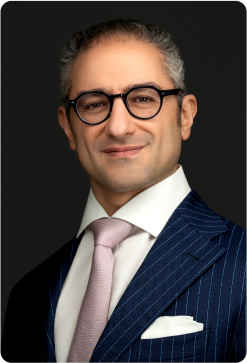
At Evolve Your Life in Chicago, Dr. Amir Dorafshar evaluates breast augmentation candidates based on a combination of physical and psychological factors. The best candidates share the following characteristics:
- Age 18 or older (22 or older for silicone implants per FDA guidelines)
- In good overall physical health with no active infections or uncontrolled medical conditions
- Breasts fully developed and at a stable size for at least one year
- At a stable, healthy weight (not planning major weight loss or gain)
- Non-smoker, or willing to stop at least four to six weeks before and after surgery
- Realistic expectations about outcomes — augmentation enhances, it does not transform
- Personal motivation — not pressure from a partner or others
What Concerns Does Breast Augmentation Address?
Breast augmentation is the appropriate procedure for patients whose primary concerns include:
- Naturally small breasts (hypomastia)
- Volume loss after pregnancy, breastfeeding, or weight loss
- Breast asymmetry where one breast is noticeably smaller than the other
- Loss of fullness in the upper breast pole (“deflated” appearance)
When Is Breast Augmentation Not Enough?
When sagging is present
Implants add volume and can create the visual impression of a slight lift, but they do not correct true breast ptosis (drooping). If the nipple sits at or below the inframammary fold, a breast lift (mastopexy) is required — either alone or in combination with implants.
When breast augmentation mastopexy is the right choice
Patients who have both volume loss and sagging — most commonly after pregnancy and breastfeeding — may benefit most from a combined augmentation mastopexy. Dr. Dorafshar evaluates each patient’s anatomy individually to determine the optimal approach.
What Factors May Disqualify a Candidate from Breast Augmentation?
- Active or unresolved breast cancer, or significant family history requiring surveillance
- Current pregnancy or breastfeeding
- Significant, untreated body dysmorphic disorder
- Unrealistic expectations (expecting perfection, or seeking the procedure under pressure)
- Active smoking without willingness to stop
- Severe medical conditions that elevate anesthetic risk
Implants vs. Fat Transfer: Which Is Right for You?
Silicone and saline implants are the most common choice, providing predictable, durable size increases of one to four cup sizes. Fat transfer augmentation (autologous fat grafting) uses harvested body fat to add modest enhancement — typically half to one cup size — without implants. Fat transfer suits patients wanting natural enhancement who have adequate donor fat and no desire for significant size increase.
Frequently Asked Questions
Can I have breast augmentation if I plan to have children?
Yes, though future pregnancies may affect results by changing breast volume and causing sagging. Most surgeons recommend completing your family first if possible. Augmentation does not affect fertility.
How long do breast implants last?
Modern silicone and saline implants are highly durable. Many patients keep their implants for 10 to 20+ years without issue. They do not need to be routinely replaced unless a problem arises (such as rupture or capsular contracture).
Will breast augmentation affect mammograms?
Implants can partially obscure breast tissue on standard mammography. Inform your radiologist that you have implants — additional imaging views (Eklund technique) are used to maximize visibility of breast tissue.
What is the difference between silicone and saline implants?
Silicone implants feel more like natural breast tissue and are the most popular choice. Saline implants are filled with sterile saltwater and are adjustable at surgery. Both are FDA-approved and safe. Dr. Dorafshar discusses the advantages of each during your consultation.
At what age is breast augmentation most appropriate?
What is the best age to get a breast augmentation? There is no single ideal age. The FDA minimum is 18 for saline and 22 for silicone. Younger patients should be fully developed and motivated for personal rather than social reasons. Excellent outcomes are achieved across a wide age range.
NEXT STEP FOR PATIENTS
Schedule a breast augmentation consultation with Dr. Amir Dorafshar at any of the Evolve Your Life locations, Chicago, Oak Brook, and Peoria. Call (312) 278-9000, or book here https://www.evolveyourlife.com/contact/book-consultation/.