How Do I Choose Between Breast Implants and a Fat Transfer Augmentation?
QUICK ANSWER
Breast implants (silicone or saline) deliver predictable, larger size increases and suit most body types. Fat transfer augmentation (autologous fat grafting) uses your own harvested body fat for modest, natural-feeling enhancement — typically half to one cup size — without implants. The right choice depends on desired size, available donor fat, and whether you prefer implants.
What Is Breast Augmentation With Implants?
Silicone and saline implants are inserted through discreet incisions (in the fold beneath the breast, around the areola, or in the armpit) and placed either beneath the breast tissue or under the chest muscle. They deliver reliable, customizable size increases ranging from one to four cup sizes. Modern implants are highly durable, FDA-approved, and the most widely performed augmentation method.
What Is Fat Transfer Breast Augmentation?
Autologous fat grafting uses liposuction to harvest excess fat from donor areas — commonly the abdomen, flanks, thighs, or back — which is then processed and injected in precise layers into the breasts. No implants are used. The result is natural-feeling breast tissue because it is your own tissue.
Not all of the transferred fat survives permanently. Approximately 40 to 60 percent of grafted fat typically integrates. Final results stabilize at three to six months.
Key Differences: Implants vs. Fat Transfer
- Size increase: Implants — 1 to 4 cup sizes | Fat transfer — typically 1/2 to 1 cup size
- Naturalness: Fat transfer uses own tissue; implants are foreign devices
- Implant concerns: No capsular contracture, rupture, or rippling risk with fat transfer
- Donor fat required: Fat transfer requires adequate fat elsewhere; implants do not
- Additional benefit: Fat transfer simultaneously slims donor area through liposuction
- Longevity: Implants are more predictable long-term; fat transfer has some variable absorption
- Recovery: Fat transfer adds donor site recovery (liposuction areas)
Who Is the Best Candidate for Implants?
- Patients wanting a significant size increase (more than one cup size)
- Those with limited donor body fat
- Patients who have had prior mastectomy or breast reconstruction requiring larger volume
- Those who want the most predictable, durable result
Who Is the Best Candidate for Fat Transfer?
- Patients wanting modest, natural enhancement without implants
- Those who are averse to the idea of implants
- Those with adequate donor fat (typically a BMI of at least 22–24)
- Patients seeking combined body contouring — slimming one area while enhancing the breasts
- Those wanting to correct minor implant irregularities without re-augmentation
Fat Transfer Frequently Asked Questions
Can I combine fat transfer with implants?
Yes. Fat transfer is sometimes used to supplement implants — adding fullness to the upper breast pole, improving cleavage, or correcting minor asymmetry or rippling. This is called hybrid augmentation.
Does fat transfer breast augmentation look and feel natural?
Yes. Because your own tissue is used, the results feel indistinguishable from natural breast tissue. Texture, warmth, and movement are identical to the surrounding breast.
How many liposuction sessions are needed for fat transfer augmentation?
Typically one session provides enough fat for augmentation. If a second session is desired for additional volume, it can be performed after the first results are stable (at six months or later).
Will fat transfer augmentation interfere with mammograms?
Transferred fat can occasionally produce calcifications on mammography. Inform your radiologist of any prior fat grafting procedures. The calcifications from fat grafting are typically benign-appearing and distinguishable from those associated with cancer.
How much does fat transfer augmentation cost compared to implants?
Fat transfer augmentation at Evolve Your Life typically costs $7,000 to $12,000 — sometimes slightly more than implant-based augmentation when the liposuction component is factored in. Exact pricing depends on the number of donor areas and volume required.
NEXT STEP FOR PATIENTS
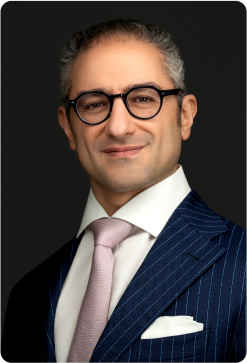
Unsure which augmentation method is right for you? Schedule a consultation with Dr. Amir Dorafshar at any of the Evolve Your Life locations, Chicago, Oak Brook, and Peoria. Call (312) 278-9000, or book here https://www.evolveyourlife.com/contact/book-consultation/.