Reconstructive surgery after cancer or trauma restores form and function to structures damaged by disease or injury. Common options include breast reconstruction after mastectomy, facial reconstruction after trauma or cancer removal, skin cancer repair (post-Mohs surgery), head and neck reconstruction, and limb salvage. Reconstructive surgery is frequently covered by insurance.
What Is Reconstructive Surgery?
Reconstructive surgery restores the appearance and function of body structures affected by cancer, trauma, infection, congenital conditions, or other medical events. It differs from cosmetic surgery in purpose: reconstructive surgery addresses functional and structural needs caused by medical necessity, while cosmetic surgery enhances appearance for personal preference.
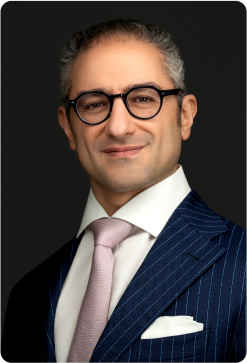
Dr. Amir Dorafshar is an internationally recognized board-certified plastic, aesthetic, and reconstructive surgeon in Chicago. He is the co-author of the authoritative textbooks Facial Trauma Surgery and Computer Assisted Planning in Craniofacial Surgery. At Evolve Your Life in Chicago, his team provides a full spectrum of reconstructive procedures with a philosophy rooted in restoring each patient’s identity and quality of life.
Breast Reconstruction After Mastectomy or Lumpectomy
Breast reconstruction is performed after a mastectomy (removal of the breast) or lumpectomy (partial removal) due to breast cancer. Under the Women’s Health and Cancer Rights Act (WHCRA) of 1998, insurance plans that cover mastectomy must also cover breast reconstruction.
Implant-based reconstruction
A tissue expander is placed at the time of mastectomy and gradually filled with saline to stretch the chest tissue over weeks to months. It is then replaced with a permanent silicone or saline implant in a second procedure. This is a common approach for patients who prefer a shorter initial surgery.
Autologous (flap) reconstruction
The patient’s own tissue is transferred from the abdomen (TRAM or DIEP flap), back (latissimus dorsi flap), or thighs (TUG flap) to reconstruct the breast. This requires microsurgical expertise but produces results that feel and age naturally. Dr. Dorafshar is highly skilled in microsurgical free flap reconstruction.
Facial Reconstruction After Trauma
Facial trauma — including fractures of the orbital rims, zygoma, mandible, and frontal bones from accidents or assaults — requires specialized surgical expertise. Dr. Dorafshar’s background in craniofacial surgery makes him uniquely qualified to address complex facial injuries. Computer-assisted surgical planning allows for precise pre-operative analysis and optimal outcomes.
Skin Cancer Reconstruction (Post-Mohs Surgery)
Mohs surgery is the gold standard for removing skin cancer from cosmetically and functionally sensitive areas such as the face, nose, and eyelids. The resulting defect requires reconstructive repair using skin grafts, local tissue flaps, or regional flaps to restore both appearance and function. Dr. Dorafshar prioritizes natural-looking, functional outcomes with minimal scarring.
Head and Neck Reconstruction
Cancers of the oral cavity, throat, larynx, and salivary glands often require extensive resection. Reconstruction involves rebuilding complex structures — including the tongue, floor of mouth, mandible, and soft palate — using microsurgical free flaps. These procedures require exceptional technical skill and experience with microsurgery.
Limb Reconstruction and Salvage
Trauma, oncologic surgery, and complex infections can result in significant damage to the arms and legs. Dr. Dorafshar specializes in limb salvage procedures — preserving function and form rather than amputation — and soft tissue reconstruction following orthopedic surgery.
Is Reconstructive Surgery Covered by Insurance?
Reconstructive surgery is generally covered by health insurance when it follows cancer treatment, results from an accident, or addresses a congenital condition. The Evolve Your Life team works directly with insurance providers and is experienced in prior authorization and documentation to maximize coverage for eligible patients.
Frequently Asked Questions
How soon after cancer surgery can I have reconstruction?
Immediate reconstruction — performed at the same time as cancer removal — is often possible and preferred. Delayed reconstruction is also an option and may be recommended based on the need for radiation therapy or other treatments.
What is a DIEP flap and how is it different from implants?
A DIEP (Deep Inferior Epigastric Perforator) flap uses tissue from the lower abdomen — skin and fat only, without the underlying muscle — to reconstruct the breast. Unlike implants, the result feels like natural breast tissue and ages naturally with the body.
Can Dr. Dorafshar perform revision of a prior reconstruction?
Yes. Revision reconstructive surgery for patients who have had prior procedures elsewhere is a core part of Dr. Dorafshar’s practice. This includes revision of implant-based reconstruction, flap revisions, and contralateral symmetry procedures.
Can reconstructive and cosmetic procedures be combined?
In some cases, yes. For example, breast reconstruction may include adjustment of the opposite breast for symmetry. The reconstructive and cosmetic components are often addressed together.
How long does reconstructive surgery recovery take?
Recovery varies significantly based on the procedure. Post-Mohs repair may require minimal downtime. Microsurgical free flap breast reconstruction may require a hospital stay of several days and six to eight weeks of recovery.
NEXT STEP FOR PATIENTS
To discuss reconstructive surgery options, schedule a consultation with Dr. Amir Dorafshar at any of the Evolve Your Life locations, Chicago, Oak Brook, and Peoria. Call (312) 278-9000, or book here https://www.evolveyourlife.com/contact/book-consultation/.