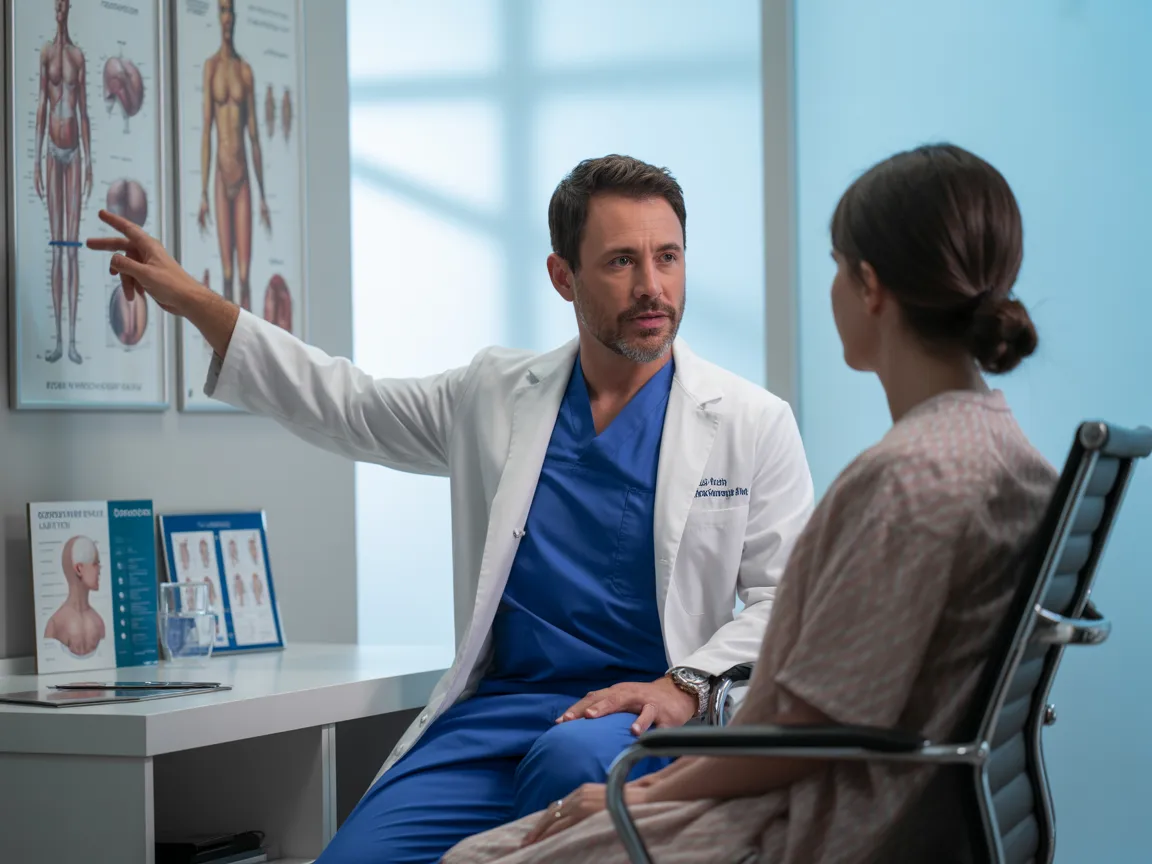
Most patients researching breast augmentation in Chicago, IL have already read about implant types and recovery, but fewer understand what actually happens step by step during the surgery itself. Dr. Amir Dorafshar, MD, FACS performs breast augmentation across Evolve Your Life’s Chicago, Peoria, and Oak Brook, IL locations, with the downtown Chicago office in the Gold Coast a short walk from the Magnificent Mile.
What Happens During Breast Augmentation Surgery
The procedure begins with an incision placed in one of a few inconspicuous locations, most often the fold beneath the breast, around the areola, or within the armpit, chosen based on implant type, body shape, and patient preference. The American Society of Plastic Surgeons notes these placements are selected specifically to minimize visible scarring. From there, the surgeon creates a pocket either above or below the chest muscle, and the implant, saline or silicone, is positioned to sit naturally against existing breast tissue rather than simply added on top of it. Placement depth, incision site, and implant profile are all decided together, since each choice affects how the final result looks and feels.
Surgery typically takes one to two hours under general anesthesia, and most patients go home the same day. Swelling is greatest in the first week, with implants gradually settling into their final position, called “drop and fluff,” over several weeks to a few months as tissue relaxes around them.
Choosing Implant Type and Placement
Saline implants are filled with sterile saltwater and can be adjusted slightly at the time of surgery, while silicone gel implants come pre-filled and tend to feel closer to natural breast tissue for many patients. The FDA has approved both after extensive testing and considers them generally safe when used as labeled, though implants are not lifetime devices; its consumer guide, What to Know About Breast Implants, is a useful starting point for patients researching the decision, including potential concerns such as capsular contracture and implant rupture over time.
Placement above or below the muscle affects both appearance and recovery: sub-muscular placement can look more natural for thinner patients but generally involves a longer initial recovery, while placement above the muscle heals faster but may show more visible implant edges in patients with less natural tissue coverage. Dr. Dorafshar reviews these tradeoffs individually with each breast augmentation patient rather than defaulting to one combination for everyone.
Patients preparing for the procedure can review our guide How to Prepare for Breast Augmentation, and those weighing implants against a fat-based approach may find Breast Implants vs. Fat Transfer useful for comparing the two paths. Our article Am I a Candidate for Breast Augmentation? covers the health and anatomical factors that go into that determination.
It’s worth noting that breast augmentation does not correct significant sagging on its own; patients with notable drooping are often better served pairing augmentation with a lift. Patients throughout Chicago, Peoria, and Oak Brook can schedule a consultation with Dr. Dorafshar to walk through implant type, incision, and placement in more detail before deciding on a surgical plan.